CIM – Ceramic Injection Moulding

An innovative method for the production of precision ceramic components from high-purity oxides
Enquire about a part
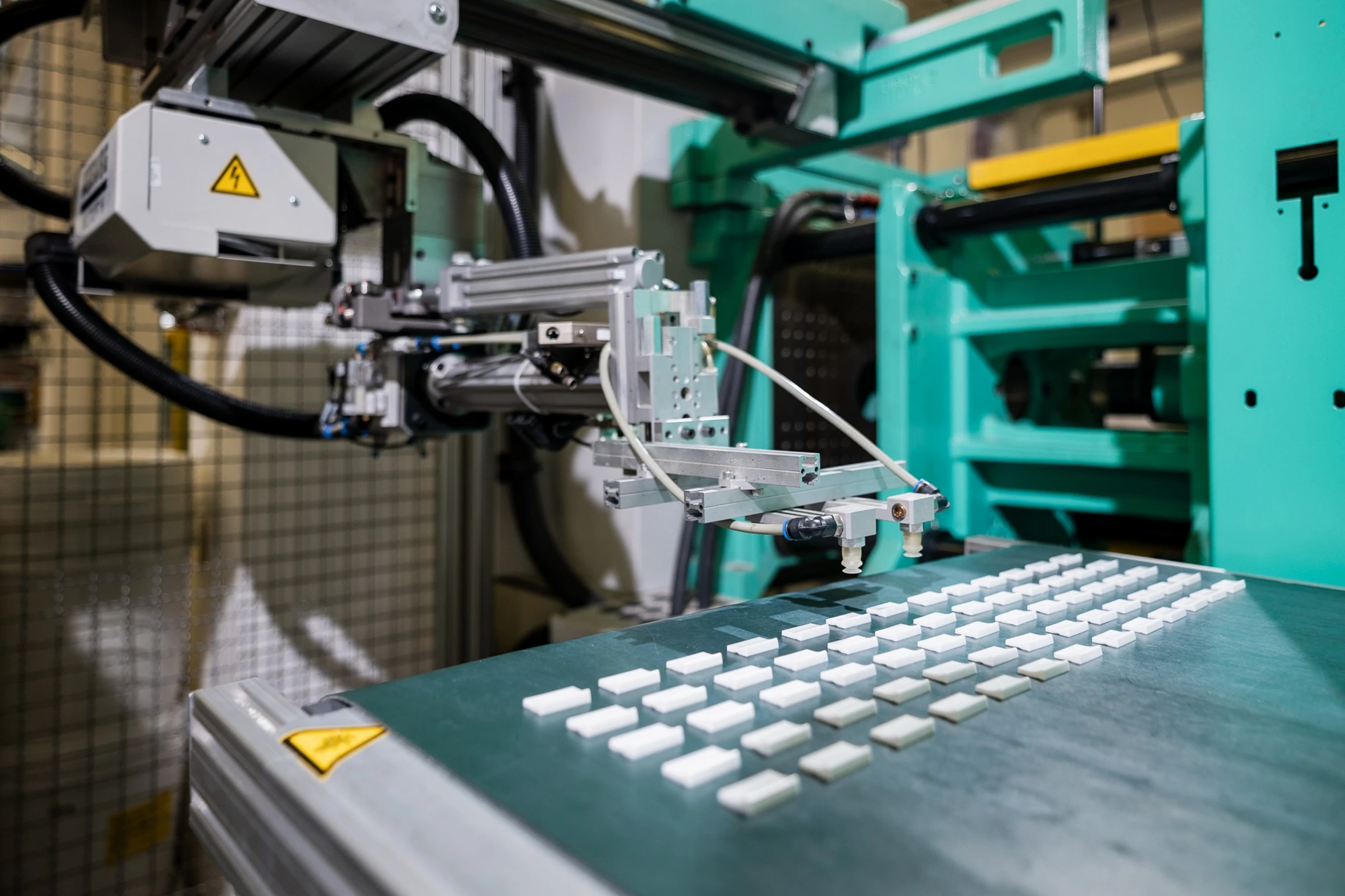
CIM rovnání na pás

What is CIM?

Ceramic injection moulding is an advanced technology for the manufacture of complex ceramic components. This method combines the design flexibility of plastic injection moulding with the outstanding material properties of engineering ceramics.

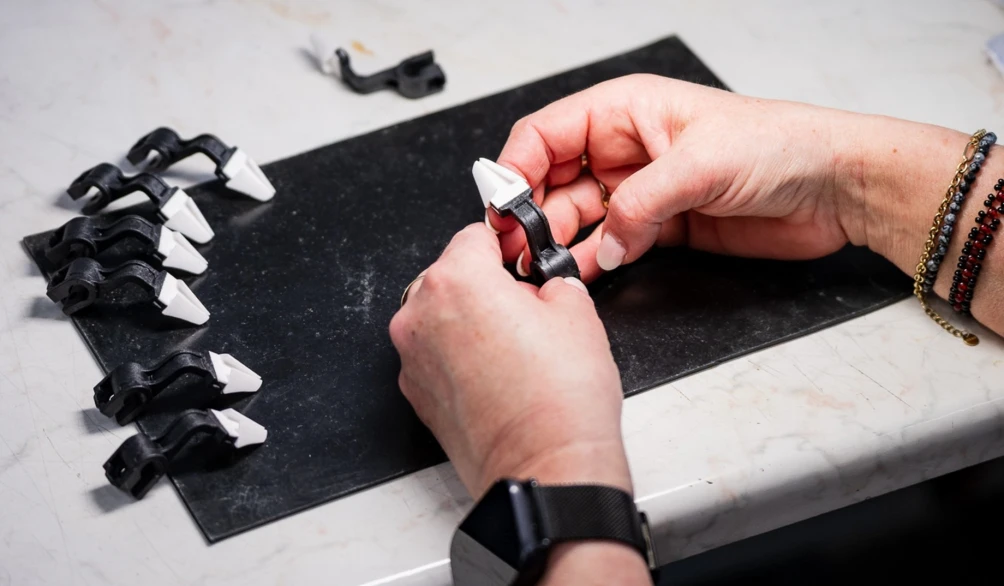
CIM jehlánky

Components produced using CIM technology

From miniature orthodontic brackets to sensors for aircraft engines. CIM enables the production of parts from materials that would be very difficult to manufacture using conventional methods such as machining or die-casting. We’ll take your part through the CIM process – from suitability assessment and feedstock preparation right through to final delivery.

CIM díl s plastem

The CIM manufacturing process

Four steps from feedstock to the finished part. Each of them takes place under our own roof.

1. Raw materials and feedstock preparation

Vibrom spol. s r.o. specialises in the processing of high-purity oxide ceramics, in particular:

  • Aluminium oxide (Al₂O₃): characterised by its hardness and chemical resistance.
  • Zirconia (ZrO₂): characterised by high fracture toughness and abrasion resistance.

A key aspect of our expertise is the in-house preparation of feedstock. The process involves the precise dosing of submicron ceramic powders and a multi-component polymer binder. Homogenisation takes place under defined rheological conditions, followed by granulation. Our proprietary feedstock formulation enables us to precisely control viscosity and subsequent shrinkage during firing.

2. The injection moulding process

Due to the high abrasiveness of ceramic fillers, the feeding screws of injection moulding machines are fitted with highly resistant coatings (e.g. tungsten carbide-based), which prevent contamination of the melt by abraded metal particles – a critical factor in maintaining the dielectric and mechanical properties of the resulting ceramics.

The mould geometry is designed taking into account the material’s shrinkage coefficient, which ranges from 15 to 25 per cent depending on the binder content.

3. Thermal processing: Debinding and sintering

Once removed from the mould, the product is in the so-called ‘green part’ stage (green semi-finished product). This is followed by a two-stage transformation process:

  1. Debinding (removal of the binder): A critical phase during which the organic component is gradually extracted. The process is controlled to ensure that the structural integrity of the part is not compromised (i.e. no cracks or deformations occur). The result is the so-called ‘brown part’.
  2. Sintering: Sintering takes place at temperatures close to the melting point of the material in question (1400–1600 °C). This involves solid-state diffusion, the elimination of porosity and the formation of crystalline bonds between the grains. During this stage, the product achieves its final density, hardness and mechanical strength.

4. Final adjustments and quality control

Despite the high precision of the CIM process, we carry out additional operations to achieve extremely tight tolerances:

  • Tumbling and polishing: Adjustment of surface roughness (Ra) for functional surfaces.
  • Overmoulding: We offer technology for moulding ceramic inserts into polymer matrices, thereby creating highly durable composite assemblies.

100% output guarantee

Quality Assurance: We guarantee 100% final inspection. Using advanced metrology, we monitor dimensional accuracy, surface roughness and geometric tolerances (curvature, coaxiality). Surface quality is ensured through visual inspection to ensure that every part meets the customer’s strict requirements.

Find out what’s new